

It’s no secret the rise of e-commerce and the online retail industry is increasing the demand for efficient and cost-effective freight solutions. But, market conditions, regulations and technology can change in the blink of an eye. So when looking at Freight Agent trends and forecasts for the coming year, we must stay rooted in what stands the test of time in our industry.
What matters more than any trend are the decisions Freight Agents make every single day: Shipper relationships, Carrier selection, pricing conversations, risk management, and time allocation.
That being said, let’s take a look at six trends and a checklist of how experienced Agents can prepare for what may be to come in 2027.
Trend 1: Shippers Will Expect Faster, More Proactive Communication
Expectations for timely updates, early exception alerts and clear recommendations are growing. Status reports are not enough. According to the Future of Logistics Intelligence Report of 2026, 40% of freight delays are the result of poor communication.
In 2027, proactive communication matters (we talk more about that here and here).
Experienced Agents can turn human judgment and communication into key differentiators as more routine tasks become automated.
Clear communication builds trust, driving customer satisfaction, repeat business and organic referrals (worth their weight in gold).
Trend 2: AI and Automation Will Become Everyday Workflow Tools
In the Age of AI it seems as if technology is taking over everything. In freight, that isn’t exactly true. AI automation may reduce routine work, but relationships, judgment, negotiation and accountability should remain human even in 2027. Our best advice:
Automate the routine, but keep judgment and relationships human.
For example, AI tools can be used to organize prospect research, draft email outlines or edit communications, flag exceptions, track follow-ups and summarize market information. However, humans must verify and review while keeping data privacy and brokerage-approved systems in mind.
Technology should not replace negotiation, relationship building, compliance decisions or accountability.
Trend 3: Carrier Verification Will Remain Critical
In 2027, streamlining carrier verification, consistent standardized carrier-vetting and clear escalation procedures should be a top priority. Fraud risks are a growing concern within the industry and brokerages must implement robust mitigation strategies to safeguard their operations.
FMCSA requirements (as of January 2026) include financial responsibility rules to reduce fraudulent activity. These requirements are primarily the responsibility of the brokerage, rather than the Agent. However, Freight Agents should be aware of and adhere to their brokerage’s carrier verification and fraud escalation processes.
Note: Kopf Logistics Group does not provide legal advice. Please do your own research. We encourage Agents to follow their brokerage’s approved compliance and carrier-onboarding procedures.
Trend 4: Data Will Make Niche and Account Strategy More Precise
Using data to make decisions is the name of the game when it comes to strategy for Freight Agents. Data such as: pricing trends, customer activity, lane fit, equipment needs, seasonality, service issues, profit margins, and follow-up are important to consider when growing accounts.
Agents should use real account and lane signals instead of chasing every opportunity. In 2027 profit margins will matter more than volume.
Truckstop’s latest Broker trends (as of August 2026) confirms this. Data, such as pricing trends, help Agents make smarter decisions about when to stand firm or when to say no. Walking away from a load doesn’t necessarily mean less profit anymore. It can now mean Agents are positioning themselves to take advantage of the right opportunities when they come along while strengthening their existing ones with outstanding service.
This data also helps experienced Agents choose a niche to recognize good-fitting opportunities and build credibility with Shippers.
Trend 5: Relationship-Based Prospecting Will Work Best With Better Research
Referrals, existing networks, cold outreach, LinkedIn and load boards can support prospecting when Agents use them intentionally. When we say intentionally, we mean building a repeatable prospecting system that combines research, relationship-building, and excellent communication at every stage of the process.
It’s the human, personalized, targeted approach that is helping Agents stand out and build a solid book of business in 2027.
Trend 6: Brokerage Support Will Matter More as Complexity Rises
Freight Agents rely on their brokerages to provide technology access, accounting, credit approval, carrier onboarding, claims administration and responsive business-office support so they are free to focus on customers and provide excellent service to their Shippers.
But what happens if the brokerage support is unreliable? Agents spend extra time communicating with their brokerage and may lose the customers they’ve worked so hard to secure. Experienced Agents should consider this as they plan ahead for the coming year.
Readiness Checklist For Experienced Freight Agents
With all six of these trends in mind, how is an Agent to prepare? Carve out some quality time to review the following checklist and make a plan to move forward with confidence.
Review Your Book Of Business
How is the health and concentration of your active book of business? If you aren’t tracking your Key Performance Indicators (KPI), we highly recommend you do (this spreadsheet will help get you started).
KPIs are helpful to provide an overview of your accounts and bring attention to areas which may need improvement over the coming year:
- Total Active Accounts: The total number of Shippers for which you are currently moving loads.
- Total Gross Revenue: The total revenue for the year before deducting expenses.
- Total Net Margin: What is your margin?
- Average Gross Profit Margin: The target is between 12-15%.
- Top Account Concentration: Aim for less than 25% for each account to build stability in your book. If your top account is generating most of your revenue, build your book with these strategies.
- Average Days Sales Outstanding (DSO): Ideally this should be less than 30 days. A reliable brokerage plays a key part in this number.
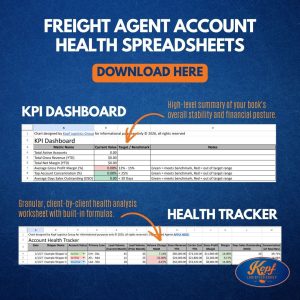
The details that drive those KPIs determine the health of your accounts so you can make strategic decisions going forward. Review the granular details, such as:
- Revenue and Margin Contribution: Track weekly, monthly, and quarterly gross profit per Shipper account to see which clients drive real income versus low-margin volume.
- Account Concentration: Identify if too much revenue depends on a single Shipper, which creates high financial risk if they leave or cut shipping budgets.
- Load Volume and Frequency Trends: Monitor shipment counts per client over time to spot drops in recurring freight, seasonal slumps, or lost routing guides.
- Accounts Receivable and Aging: Check client payment speeds and credit limits to make sure Shippers pay invoices on time and do not tie up working capital.
- Carrier Performance and Claims: Review on-time pickup/delivery percentages, tender acceptance rates, and cargo claims linked to specific lanes or accounts.
This step is the most tedious and time-consuming but the data will provide a clear picture of an Agent’s success rather than operating off hunches or predictions.
Explore New Possibilities
Once an Agent has identified their account health and taken a closer look at their KPIs, it becomes easier to Identify lanes, niches and customer segments that merit deeper focus. Use this information to make a strategic action plan for the year.
Review Your Verification Process
Since increasing fraud is one of the trends for the coming year, it is essential to adhere to your brokerage’s carrier-verification and fraud escalation procedures. If you aren’t familiar with either, take time to review their processes.
Analyze Your Prospecting Data
Audit prospecting and follow-up data, not just activity volume. Tools like Optimus, Apollo, and Truckstop can help score leads.
Look Into Automations
Decide which repetitive tasks can be automated safely and which require personal judgment.
Consider Your Brokerage
Review whether your current brokerage partnership supplies the operational tools and human support needed for the year ahead.
Prepare for Freight Agent Trends With the Right Brokerage
Bottom Line: The freight industry is growing. Global Market Insights estimates 6% Compound Annual Growth Rate in the freight brokerage market from 2024-2032. One of the key players in all of this? Freight Agents!
Freight Agents play a critical role in connecting Shippers to Carriers to ensure loads are delivered on demand.
Agents who are aware of the Freight Agent Trends and want to prepare to thrive in 2027 must prioritize Shipper relationships through proactive communication, automate everyday workflow while still keeping relationships human, ensure their broker is vetting carriers consistently, choose opportunities strategically based on data, combine research with relationship-based prospecting, and operate under the authority of a brokerage who provides support whenever it is needed.
If you are an Agent whose Broker is not providing reliable operational support and you feel more like a number than a name, you owe it to yourself to give Kopf a closer look. Agents routinely choose Kopf because of our reliability and human approach. When you’re ready to make the call, we’ll be here for you!
Here’s to your success in 2027!
Read this next: Grow Your Freight Book: The Ultimate Freight Agent Marketing Guide
Frequently Asked Questions
What Freight Agent trends should experienced Agents watch in 2027?
- Prioritize Shipper relationships
- Automate everyday workflow while still keeping relationships human
- Ensure Brokers are vetting carriers consistently
- Choose opportunities strategically based on data
- Combine research with relationship-based prospecting
- Operate under the authority of a brokerage who provides support whenever it is needed
Also, Freight Agents should be sure to review the health of their accounts throughout the year. Download our Freight Agent Book Health Tracker spreadsheet.
Will AI replace Independent Freight Agents?
No. Automation may reduce routine work, but relationships, judgment, negotiation and accountability should remain central.
How can an Independent Freight Agent prepare for changing market conditions?
Agents should take a look at the health of their book of business, monitor live account and lane data, strengthen customer communication, follow approved risk procedures, and evaluate operational support. Take a look at the “readiness checklist” section above.